


FAQs
12/5/2025
Contents


Some people enjoy mowing their lawn while listening to music and breathing in the fresh scent of cut grass. Others prefer hiring professionals, despite the recurring costs. Now, technology offers a third option: robot lawn mowers. Inspired by robotic vacuum cleaners, the best models can significantly reduce the effort needed for this chore. While they require an initial investment of €1,000 to €5,000, they often pay for themselves over time compared to ongoing professional service fees. This guide provides a clear comparison of the latest smart mowers to help you make the right choice.
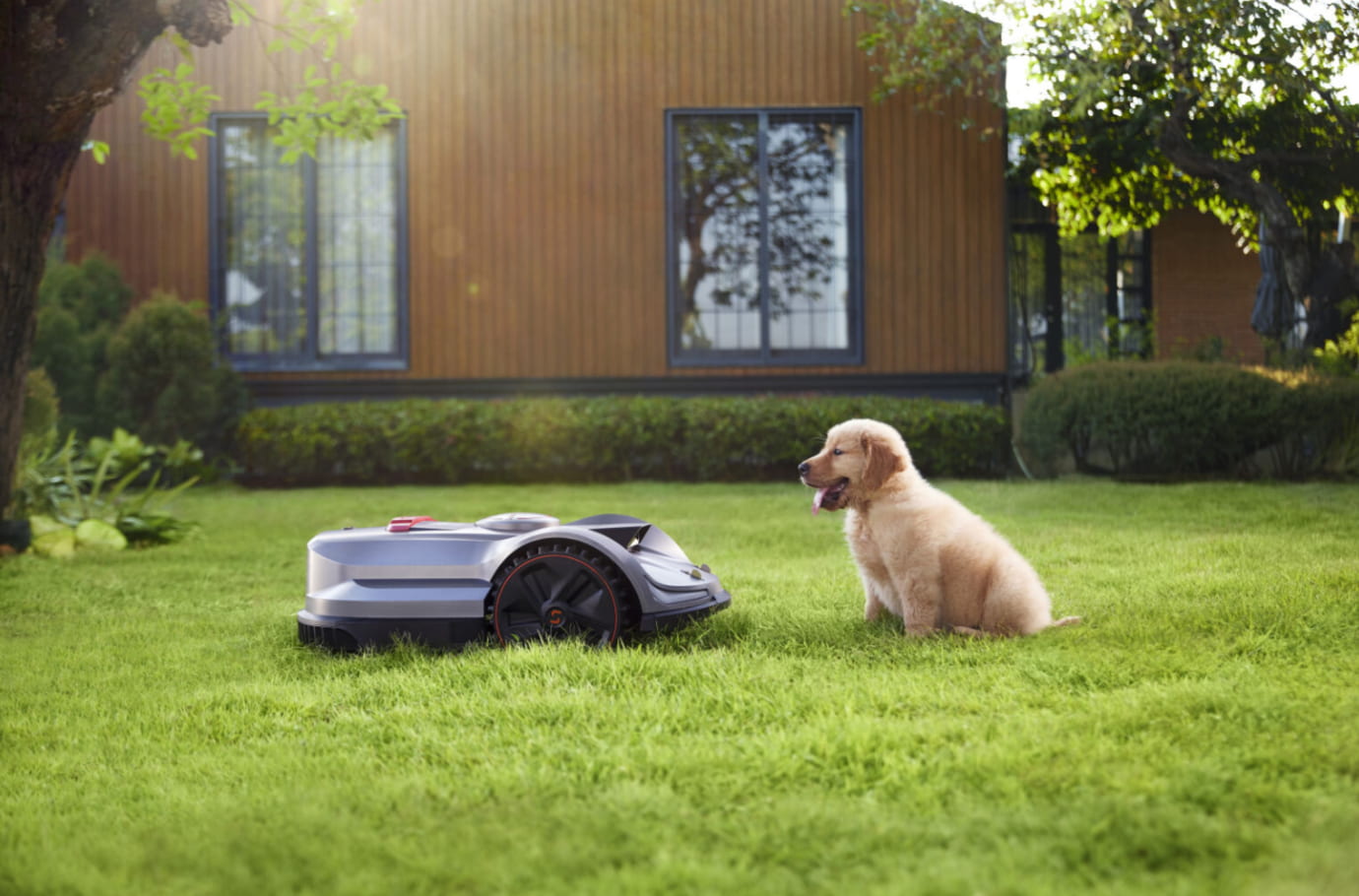
The benefits of robot mowers extend far beyond simple convenience. These intelligent machines represent a fundamental shift in how we approach lawn care, offering advantages that touch on time savings, environmental impact, and even the health of your grass.
The average homeowner spends 50 to 100 hours each year mowing their lawn. That is equivalent to two full weeks of vacation time spent pushing a mower. Robot mowers reclaim this time completely. Once set up, they operate autonomously, quietly maintaining your grass according to the schedule you set.
Imagine having every Saturday morning free while your lawn stays perfectly trimmed. The initial investment quickly pays for itself in recovered leisure time and eliminated landscaping bills.
Traditional mowing methods involve cutting too much grass at once, which stresses the plants and leaves them vulnerable to disease. Robot mowers use a completely different approach called the "mulching method." They cut tiny amounts of grass frequently, leaving the fine clippings to decompose and nourish the soil.
This continuous micro trimming encourages denser turf growth, reduces weed invasion, and creates a healthier root system. The result is a lawn that is not just neat, but genuinely healthier and more resilient.
In an era of growing environmental awareness, robot mowers stand out as an eco-friendly choice. Powered by efficient batteries, they produce zero direct emissions—unlike gas mowers, which are a known source of air pollution. Their energy use is modest, comparable to that of a standard light bulb, and their quiet operation (typically 55–65 dB) makes them considerate neighbors. For even greener performance, some models can be paired with solar panels.
What’s more, using a robot mower means less exposure to heat and allergens compared to operating traditional mowers, adding a personal health benefit to their environmental appeal.
To get truly hands-off, high-quality mowing, certain core features make all the difference. At a glance, the most capable robot mowers typically include:
Smart navigation and obstacle recognition
Precise cutting systems with consistent coverage
Adaptive terrain handling for varied lawn surfaces
Reliable power management and automatic charging
App-based controls for easy scheduling and adjustments
For a deeper look at how these features work specifically in wire-free models and why they matter, continue with our guide: Best Robot Lawn Mowers Without Perimeter Wire: Smart Mowing Made Simple.
After extensive testing and research, these five models represent the best choices across different categories and budgets.
Working area capacity: 0.75 acre (3000m²)
Maximum Incline: 70% / 35°
Cutting Height, min-max: 0.8-4.0 inches
Cutting Width: 14 inches
Typical mow time on one charge: 150 minutes
Typical charging time: 90 minutes
When it comes to performance, the Sunseeker Elite X7 does not disappoint. Even during the first mow of spring—when parts of the lawn had grown noticeably tall—the mower delivered fast, clean, and consistent results. The finished lawn looked impressively tidy, with straight, well-defined lines that resembled professional landscaping.
Its agility is another standout strength. The X7 handles turns smoothly and navigates effortlessly around trees, garden beds, and landscape features. It climbs slopes with confidence and never struggled, even when rolling over a forgotten dog toy left in the yard.
Adding to the experience is the intuitive app, which provides real-time progress updates and alerts once the job is completed. Combined with its powerful AONAVI navigation system capable of achieving up to centimeter positioning accuracy, the Elite X7 delivers a level of precision and reliability that makes it an easy top choice for most homeowners.
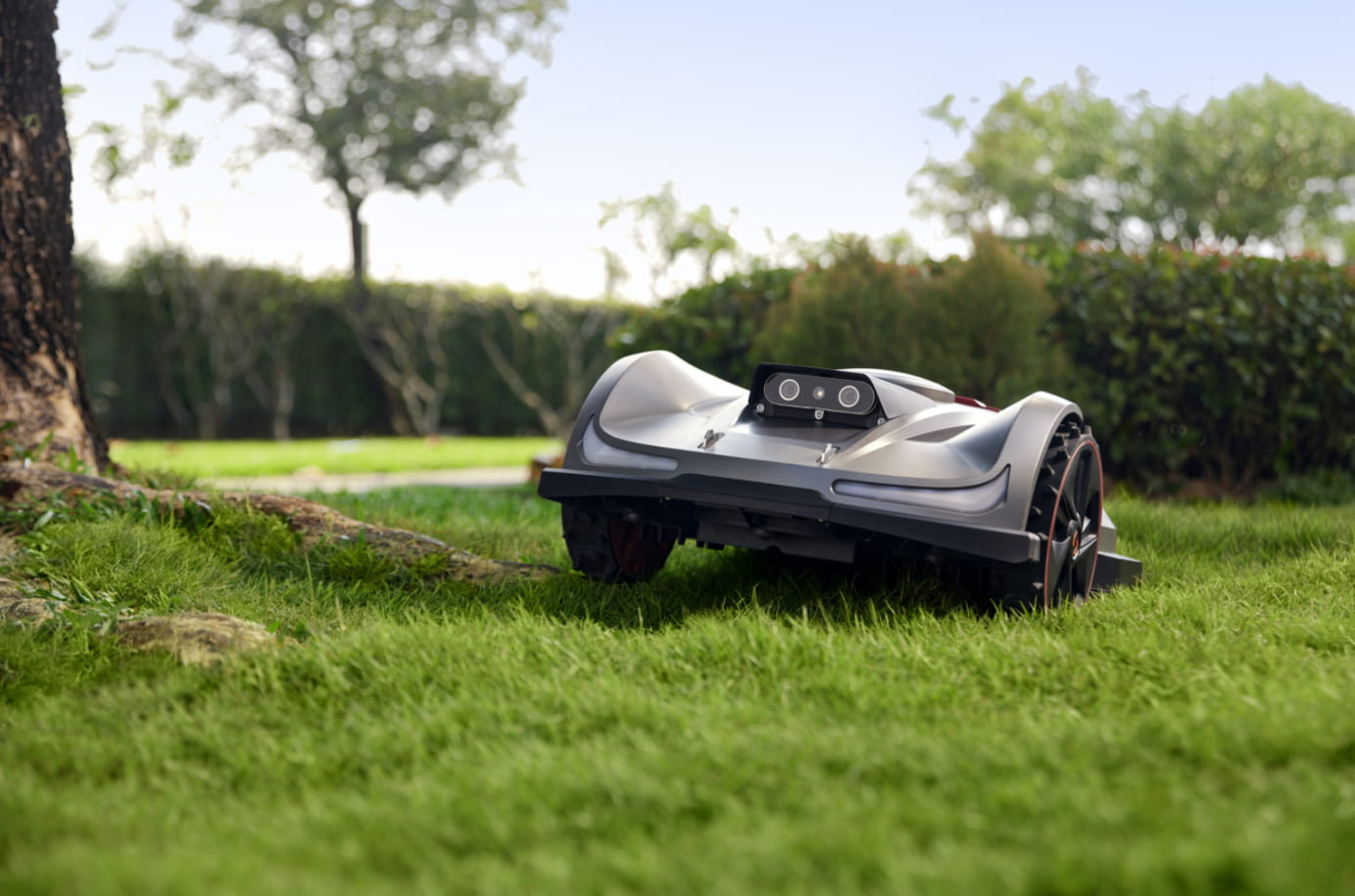
The Sunseeker Elite X7 robot mower navigating rough terrain
Working area capacity: 2.5 acre (10000m²)
Maximum Incline: 45% / 24°
Cutting Height, min-max: 0.8-2.4 inches
Cutting Width: 14 inches
Typical mow time on one charge: 270 minutes
Typical charging time: 60 minutes
Designed for estates and expansive properties, the Husqvarna Automower® 550 EPOS is built to handle serious acreage with minimal oversight. This wire free, satellite guided mower can maintain up to 10000m² on a single charge, making it an ideal choice for large open lawns where precision and efficiency matter. Its EPOS navigation system uses high accuracy satellite positioning to map and operate within virtual boundaries, eliminating the need for perimeter wire installation even across vast spaces.
The mower’s commercial grade construction offers long term durability, while its powerful cutting system manages taller or fast growing grass without hesitation. It performs particularly well in wide, unobstructed areas, maintaining consistent patterns and reliable coverage. Although it comes at a higher price point, the 550 EPOS delivers exceptional results for users who want professional level performance on large properties with minimal manual involvement.
Working area capacity: 0.75 acre (3000m²)
Maximum Incline: 50% (27°)
Cutting Height, min-max: 1.2-3.6 inches
Cutting Width: 12.9 inches
Typical mow time on one charge: 45 minutes
Typical charging time: 75 minutes
Ecovacs Goat A3000 uses a 360° top LiDAR and AI camera to generate precise maps that improve with every run. Initial setup involves guiding the mower around the yard to establish boundaries, after which it operates autonomously.
The Ecovacs app enables scheduling, mode selection—automatic, area, edge, manual, enhanced—and adjustment of cutting height and direction. Automatic mode covers the whole lawn, while area mode allows segmented mowing for specific zones.
Highly efficient, the A3000 trims around 4,300 sq ft in just 60 minutes per charge. Integrated rain sensors detect precipitation, prompting the mower to return to its dock automatically, ensuring both safety and consistent lawn maintenance.
Working area capacity: 1.25 acre (5000m²)
Maximum Incline: 80% (38.6°)
Cutting Height, min-max: 1.0-2.7 inches
Cutting Width: 15.7 inches
Typical mow time on one charge: 190 minutes
Typical charging time: 120 minutes
The Mammotion Luba 2 AWD 5000X is engineered specifically for large and topographically challenging American lawns. Its powerful all-wheel-drive system tackles slopes up to 80% (38.6°).
Its UltraSense AI vision system enables precise, fully automatic mapping while improving obstacle recognition for safer operation. Combined with its wide 15.7-inch dual cutting discs and strong daily mowing capacity, the Luba 2 AWD delivers consistent results even in demanding conditions.
With intuitive app-based zone management and creative touches like 3D lawn pattern printing, this model offers both advanced performance and personalization, making it a standout choice for complex, multi-area properties.
Working area capacity: 0.125 acre (500m²)
Maximum Incline: 30% (17°)
Cutting Height, min-max: 2.0-3.6 inches
Cutting Width: 7.1 inches
Typical mow time on one charge: 60 minutes
Typical charging time: 90 minutes
The Segway Navimow i105N is built for tight, compact yards where precision and agility matter most. Its upgraded EFLS 2.0 positioning technology provides extremely accurate navigation, allowing the mower to move confidently through narrow passages and complex layouts without missed patches.
Setup is simple thanks to AI-assisted mapping and VisionFence image-based obstacle avoidance, which help the mower learn your yard quickly and operate smoothly around common garden elements. The Segway app adds further convenience with scheduling, multi-zone control, and real-time monitoring.
Quiet operation at 58 dB(A) makes it ideal for close-neighbor environments, and its ability to climb slopes up to 30% (17°) ensures reliable performance across small but varied terrain. Compact, smart, and highly maneuverable, the i105N is an excellent fit for modern small gardens.
|
Model |
Sunseeker Elite X7 |
Husqvarna Automower® 550 EPOS |
Ecovacs Goat A3000 |
Mammotion Luba 2 AWD 5000X |
Segway Navimow i105N |
|
Price |
€2,399 |
€5,699 |
€2,999 |
€2,999 |
€799 |
|
Working Area |
0.75 acre (3000 m²) |
2.5 acre (10000 m²) |
0.75 acre (3000 m²) |
1.25 acre (5000 m²) |
0.125 acre (500 m²) |
|
Max Incline |
70% (35°) |
45% (24°) |
50% (27°) |
80% (38.6°) |
30% (17°) |
|
Cutting Width |
14 inches |
14 inches |
12.9 inches |
15.7 inches |
7.1 inches |
|
Typical Mow Time |
150 min |
270 min |
45 min |
190 min |
60 min |
|
Typical Charge Time |
90 minutes |
60 minutes |
75 minutes |
120 minutes |
90 minutes |
|
Waterproof Rating |
IPX5 |
IPX4 |
IPX6 |
IPX6 |
IP66 |
|
Navigation System |
AONAVI (RTK + VSLAM) |
EPOS (Satellite) |
LiDAR + AI Vision |
UltraSense AI + RTK |
EFLS 2.0 (AI-assisted) |
|
Key Strength |
All-round precision, strong slope handling, intuitive app |
Large-area coverage, wire-free navigation, professional durability |
LiDAR precision, AI-learning maps, rain-sensing auto-dock |
Extreme slope capability, all-wheel drive, wide cutting deck |
Compact maneuverability, precise navigation in tight spaces, quiet operation |
(Data sourced from publicly available websites as of 05/12/2025 and provided for reference only)
Many potential users hesitate because they imagine complicated setup processes or high maintenance requirements. The reality is much simpler than most people expect.
Modern robot mowers are designed for straightforward installation. GPS models typically require less than an hour: place the charging station, set up the reference station if needed, and walk the mower around your property boundaries using the app. Boundary wire systems involve laying a perimeter wire, which can take a few hours but is a one time project. Most manufacturers provide detailed tutorials and customer support to guide you through the process. The key is proper initial setup, which ensures years of trouble free operation.
Once installed, robot mowers require minimal intervention, but a few simple practices optimize their performance. Schedule mowing sessions during daylight hours when possible, as some navigation systems work better with good visibility. If you have a boundary wire system, periodically check for exposed sections that might need securing. Keep the charging contacts clean to ensure reliable docking. Most importantly, trust the system it's designed to work continuously, not in single marathon sessions.
Like any garden tool, robot mowers benefit from seasonal attention. In spring, check the blades for wear and replace them if necessary. Clean the sensors and charging contacts to ensure optimal performance. During peak growing season, you might need to empty the grass container if your model has one, though most mulching types do not. As winter approaches, clean the mower thoroughly, remove the battery if possible, and store it in a dry place. This simple seasonal routine ensures your mower remains in perfect condition for years.
With so many options available, selecting the right model comes down to understanding your specific needs and matching them to the appropriate technology and features.
Start with a honest assessment of your property. Measure your lawn area accurately, noting any steep slopes, complex borders, or multiple zones. Consider your grass type some varieties require specific cutting approaches. Think about obstacles like trees, garden beds, and water features. This assessment will help you narrow down to models with the appropriate navigation technology, battery capacity, and cutting power for your specific situation.
Robot mowers range from around €800 for basic models to €4,000 or more for advanced systems. While the initial investment may seem significant, consider the long term value. You are saving weekly landscaping costs, recovering dozens of hours each year, and increasing your property value with a better maintained lawn. Mid range models between €1,500 and €2,500 typically offer the best balance of features and reliability for most homeowners.
When comparing models, consider which features provide long term value. GPS navigation offers greater flexibility than boundary wires if you plan to modify your garden layout. App integration becomes more valuable as smart home technology evolves. Battery technology affects both runtime and long term replacement costs. Choosing a model from an established brand with good customer support ensures you will have access to software updates and service when needed.
The evolution of robot mower technology has reached a point where these devices are no longer luxury gadgets but practical tools that transform your relationship with garden maintenance. The combination of advanced navigation, smart scheduling, and efficient cutting delivers results that often surpass traditional mowing methods, while giving you back one of life's most precious resources: your time.
Whether you choose the technologically advanced Sunseeker Elite X7, the rugged Mammotion Luba 2 AWD for challenging terrain, or the compact Segway Navimow i105N for small yards, you're investing in more free weekends and a beautifully maintained outdoor space. Your journey toward effortless lawn care begins with understanding your needs and choosing the right partner—so you can spend less time working on your lawn, and more time enjoying it.
Yes. many robot mowers can cut close to the lawn’s edge, but performance varies by model. Some use side-offset blades or “edge mode” to trim right along borders, while others may leave a narrow strip that requires occasional manual touch-up. Proper boundary setup also helps improve edge-cutting accuracy and consistency.
Yes, most robot mowers are designed to operate without an active internet connection. Once initially configured and scheduled via the mobile app, they can perform their routine mowing tasks independently. The internet connection is primarily needed for remote control, receiving app notifications, or downloading software updates. For daily autonomous operation, connectivity is not required.
Regular blade replacement (every 1–2 months during peak season), periodic sensor cleaning, and seasonal checkups are essential. Most models feature self-diagnostic systems that alert users through their companion apps when maintenance is needed.