FAQs
December 23, 2025



With models ranging from basic to brilliant, how do you pick the one that’s truly right for your yard? The secret is to start not with the machines, but with your lawn itself. This guide walks you through a simple, logical process to match the perfect robotic helper to your grass, your terrain, and your life.
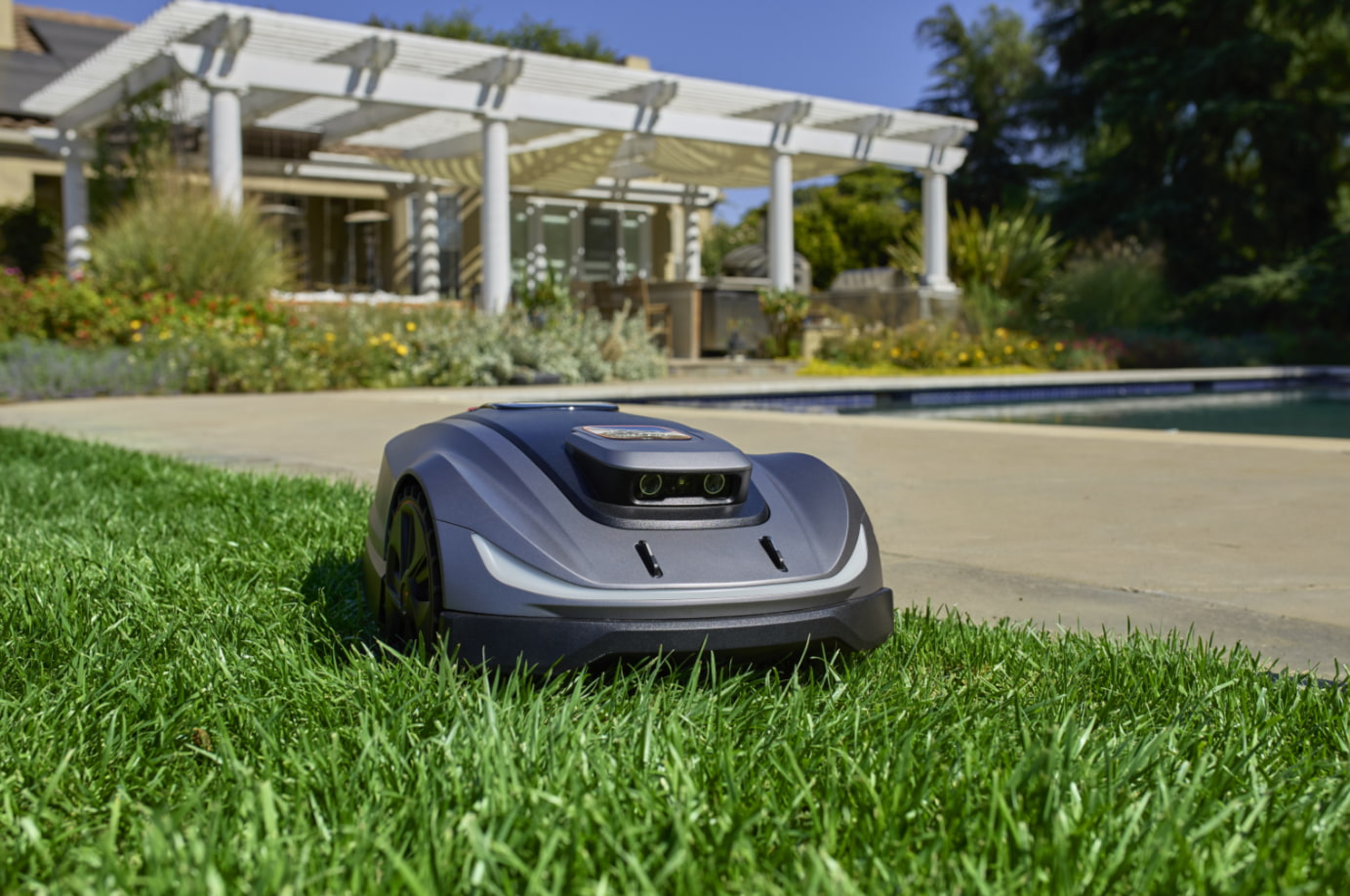
Before comparing brands or features, invest time in understanding the “client” your robot will serve: your lawn. This foundational step ensures you prioritize the right capabilities.
Accuracy matters. Don’t guess your lawn’s size. Use a free satellite mapping tool like Google Earth’s area measurement feature or a handheld measuring wheel for a physical walk. Crucially, measure only the grassy areas you want mowed, excluding your house, driveway, patios, and large garden beds. Note if your lawn is one continuous space or split into separate zones, like a front and back yard.
This total area and its division are the first numbers you’ll match against a mower’s maximum coverage specification. Always choose a model rated for at least 20% more area than your calculation to account for obstacles and efficient routing.
Your lawn's shape and slopes dictate the robot's required strength and intelligence. Start by measuring slopes. There are two key ratings to understand: the "maximum slope within the working area" (what the mower can handle in the middle of your lawn) and the "maximum slope at the boundary" (what it can manage near its perimeter wire or virtual edge). The latter is especially important if you need to create no-go zones on steep banks or have obstacles positioned on inclines.
For precise readings, use a smartphone app with a built-in level function or a dedicated digital inclinometer. Take multiple measurements at different points, focusing on the steepest sections.
Next, assess the layout. Note the width of any narrow passages between fences or garden beds—they must be wider than the mower's body. Identify if you have multiple, separate lawn areas requiring a mower with multi-zone navigation. Finally, map out and count permanent obstacles like trees, flower beds, ponds, or sculptures.
The quantity and type of these obstacles will guide your decision on safety systems: a few fixed objects may only require basic bump sensors, while a cluttered yard with children's toys or frequent garden changes benefits greatly from advanced LiDAR or vision systems that detect objects before collision. This terrain audit tells you if you need all-wheel drive, advanced navigation, and how intelligent the robot needs to be to navigate successfully.
Not all grass is created equal. Cool-season grasses like Kentucky Bluegrass or Fescue have different growth spurts and ideal cutting heights compared to warm-season varieties like Bermuda or Zoysia. Identify your grass type, as this determines the optimal cutting height range (typically 1 to 3 inches) and how often the mower needs to run, especially during peak growth in spring and fall. A dense, fast-growing lawn might demand a more powerful motor or more frequent mowing sessions than the robot’s standard schedule.
With your lawn’s profile complete, you can now intelligently compare the technologies that address its needs.
This is a fundamental choice. Wired (Perimeter Wire) systems are reliable and cost-effective. A boundary wire is buried around the lawn's edge, creating an invisible fence. Setup is a one-time project, but it limits future flexibility if you decide to change your landscape design.
Wireless systems use technologies like GPS (with RTK for centimeter accuracy), Vision AI cameras, or LiDAR (Light Detection and Ranging) to create virtual boundaries. They offer incredible flexibility for changing landscapes and easy multi-zone management. However, they may have higher upfront costs and can require specific conditions: a clear view of the sky for GPS-based systems, good lighting for Vision AI, and a relatively unobstructed environment for LiDAR to map effectively. Your terrain complexity, budget, and willingness to install physical wires will ultimately guide this choice.
Look beyond the “up to” runtime claim. Evaluate the battery capacity (in Ah), the typical charging time, and the efficiency of the docking system. A mower with a 90-minute runtime and a 60-minute charge is often more efficient on large lawns than one with a 120-minute runtime and a 120-minute charge. Consider models with lithium-ion batteries for longer lifespan and consistent power output.
Cutting quality determines how clean, even, and healthy the lawn looks after each mow. High-performance robot mowers like those from Sunseeker Elite rely on sharp, well-balanced blades and adaptive cutting patterns to deliver consistent results without scalping. Floating cutting decks help maintain uniform height on uneven terrain, while fine mulching returns nutrients to the soil. When evaluating performance, match the cutting width to your lawn size for efficient coverage, and ensure the height adjustment range suits your grass type’s growth needs.
Modern mowers are connected devices. Their smart features determine how seamlessly they fit into your life.
A user-friendly smartphone app is essential. It should allow you to easily set custom mowing schedules for different days and zones, adjust cutting heights remotely, and see the mower’s status and location. The best apps offer intuitive mapping and straightforward troubleshooting guides.
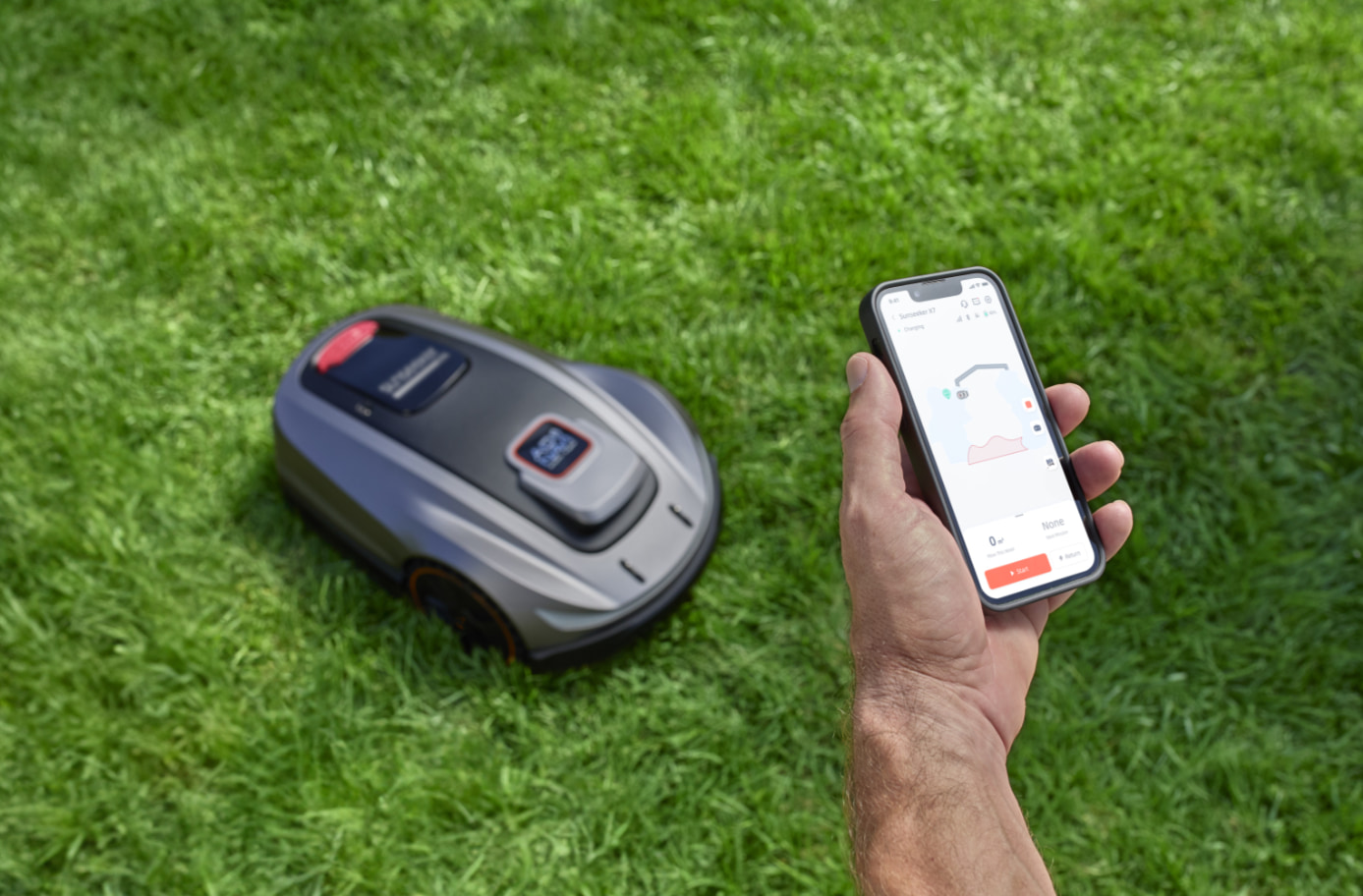
Creating a Lawn Map Using the Sunseeker Smart App
Look for rain sensors that automatically send the mower back to its dock, extending its life and protecting your lawn. Safety is non-negotiable; ensure the model has tilt and lift sensors that instantly stop the blades, PIN code security, and reliable obstacle detection to keep children, pets, and the mower itself safe.
For a tech-integrated home, check if the mower works with platforms like Amazon Alexa, Google Assistant, or Apple HomeKit. This allows for voice commands or automation routines, such as pausing the mower when your smart sprinklers turn on.
Understanding the full cost helps you find the best long-term value, not just the lowest sticker price.
Generally, expect entry-level models (for small, simple lawns) from €800-€1,500. Mid-range models (for medium lawns with some slopes or zones) range from €1,500-€2,800. High-end models (for large, complex properties with wireless navigation) start around €2,800 and can exceed €4,000. For a deeper breakdown of price tiers, ongoing costs, and long-term value, refer to our full guide: How much Does a Robot Lawn Mower Cost? A Comprehensive Guide.
Factor in ongoing costs: replacement blades (every 1-2 months during peak season), potential battery replacement after 3-5 years, and electricity consumption (which is minimal). A slightly more expensive model with a longer warranty and durable construction often costs less over five years than a cheaper model needing frequent repairs.
A strong warranty (2-3 years for the mower, 1-2 years for the battery) reflects manufacturer confidence. Research the brand’s reputation for customer support. Easy access to helpful service or clear online resources is invaluable if you encounter an issue.
Give the cutting system a final check before the first run. Ensure the blades are clean, securely fastened, and free from rust or significant dullness. Manually rotate the cutting disc to confirm it moves freely without obstruction. Addressing any issues now prevents uneven cutting or performance problems during the initial mows of the season.
Choosing the right robotic mower is a practical process of matching engineering to environment. By starting with a clear assessment of your lawn and then methodically comparing how different features meet those needs, you cut through the marketing noise. You’ll identify the machine that offers not just a list of specs, but a genuine partnership in lawn care.
The result is a confident investment that delivers what matters most: a beautifully kept lawn and the gift of your own time, season after season. Ready to find your perfect match? Explore the Sunseeker lineup of robotic mowers, designed to adapt to lawns of all shapes and sizes.
Choose a wired system for simple, reliable boundaries. Opt for wireless (GPS, Vision AI, LiDAR) if you want flexibility, easy multi-zone management, and no physical installation. Wireless models work best with clear skies and open layouts.
Yes, if you match the slope. Check the manufacturer’s rating for both working-area slope and boundary slope. Look for all-wheel drive models for better traction on inclines above 30%.
Absolutely. While initial costs range from €800–€4,000+, you save on landscaping fees, fuel, and time. Electric operation and low maintenance add long-term value, and many models come with 2-3 year warranties.