FAQs
5/27/2026
Contents



On a hilly lawn, control is the real priority. The mower should feel steady under your hands, keep its grip on dry slopes, and have enough power to cut without dragging or slowing down. Rear-wheel drive and deep-tread wheels help most on inclines, while smart mowing habits keep the job safer and cleaner.
Mowing flat ground is simple, but elevation turns yard work into a physical challenge. Finding the best push mower for hills requires a focus on stability and traction to overcome gravity safely. Standard push mower models often fail on inclines because they lack the specific engineering needed for vertical resistance.
Maintaining sloped backyards or roadside inclines demands equipment that prioritizes grip over basic mobility. This guide reviews essential features and top picks to keep your hilly landscape looking pristine. Choosing the right tool works with the landscape, minimizing slipping risks for a professional finish regardless of the grade.
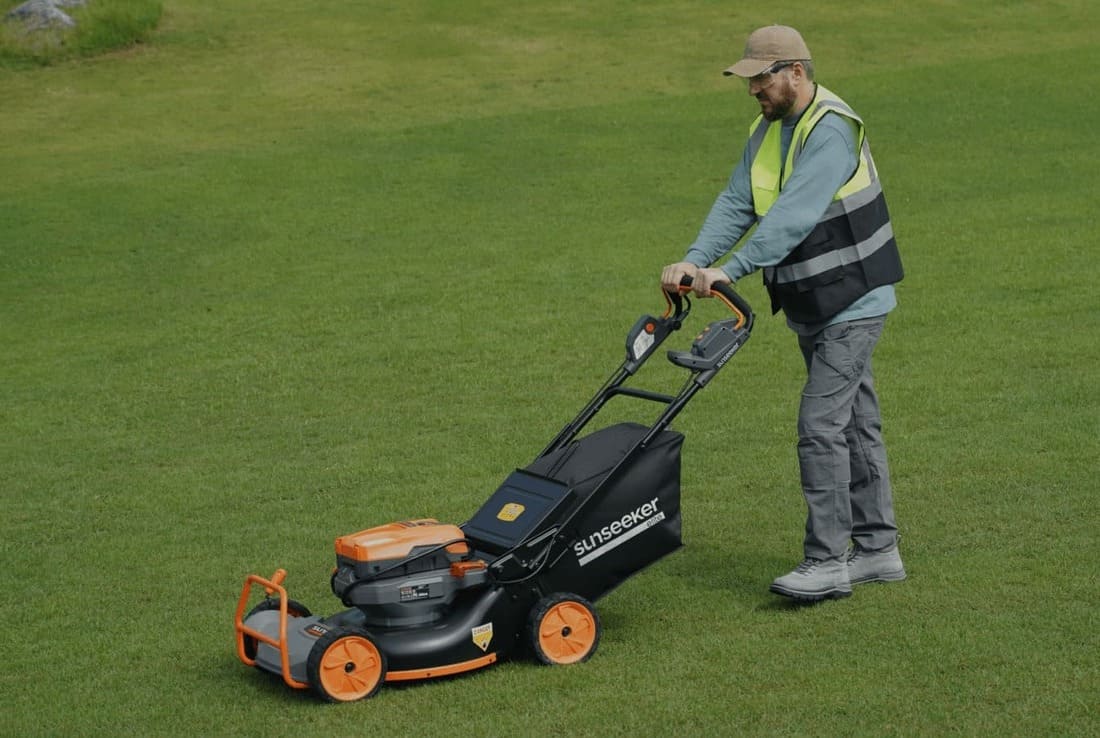
When shopping for the best self propelled lawn mower for hills, you cannot rely on aesthetics alone. The physics of mowing on an incline demands a machine that can handle weight distribution and provide consistent torque. Here are the critical features to prioritize:
Rear-Wheel Drive (RWD) Systems
For hilly terrain, RWD is almost always superior to Front-Wheel Drive (FWD). When you mow uphill, the weight of the mower naturally shifts to the back. A front-wheel-drive mower will lose traction as the front wheels lift slightly, causing them to spin out on the grass. RWD mowers use that weight shift to their advantage, digging the drive wheels into the turf for maximum grip.
High-Torque Motors
Gravity is your primary opponent on a hill. A weak motor will bog down when climbing, resulting in an uneven cut or a stalled engine. Look for high-wattage electric motors or high-cc gas engines. For instance, a 3000W motor provides the necessary "grunt" to maintain blade speed even when the propulsion system is working hard to climb a 20-degree slope.
Deck Material and Weight
You want a balance between durability and maneuverability. A steel deck, such as the 22-inch steel deck found on premium models, offers the ruggedness needed to handle the occasional bump or rock often found on uneven slopes. However, the mower should not be so heavy that it becomes unmanageable if you need to manually adjust your path.
Wheel Size and Tread
Larger rear wheels (often 10 to 12 inches) provide better stability and a smoother ride over ruts. Deep-tread tires are essential to prevent slipping, especially if the grass is even slightly damp.
Cutting Efficiency: The Dual-Blade Advantage
On hills, you often want to move quickly to maintain momentum. A dual-blade system is a game-changer here. By using two blades instead of one, the mower achieves a finer mulch and a cleaner cut in a single pass. This reduces the need for "double mowing" areas where the grass might have been flattened by the wheels during a climb.
Versatile 3-in-1 Grass Handling
Working on a hill often means dealing with different types of grass density. A high-quality best self propelled lawn mower for hills should offer mulching, rear discharge, and bagging in one machine. This versatility allows you to mulch for quick routine maintenance, which returns nutrients to the soil and helps stabilize the ground. Alternatively, you can bag the clippings for a cleaner finish before guests arrive or use rear discharge when tackling heavier growth on the most difficult parts of the slope. Having these flexible options ensures the grass remains healthy despite the stress of growing on an incline.
Selecting the right machine depends on your specific terrain. Here are five of the top-performing options currently on the market, ranging from high-powered electric innovators to traditional gas workhorses.
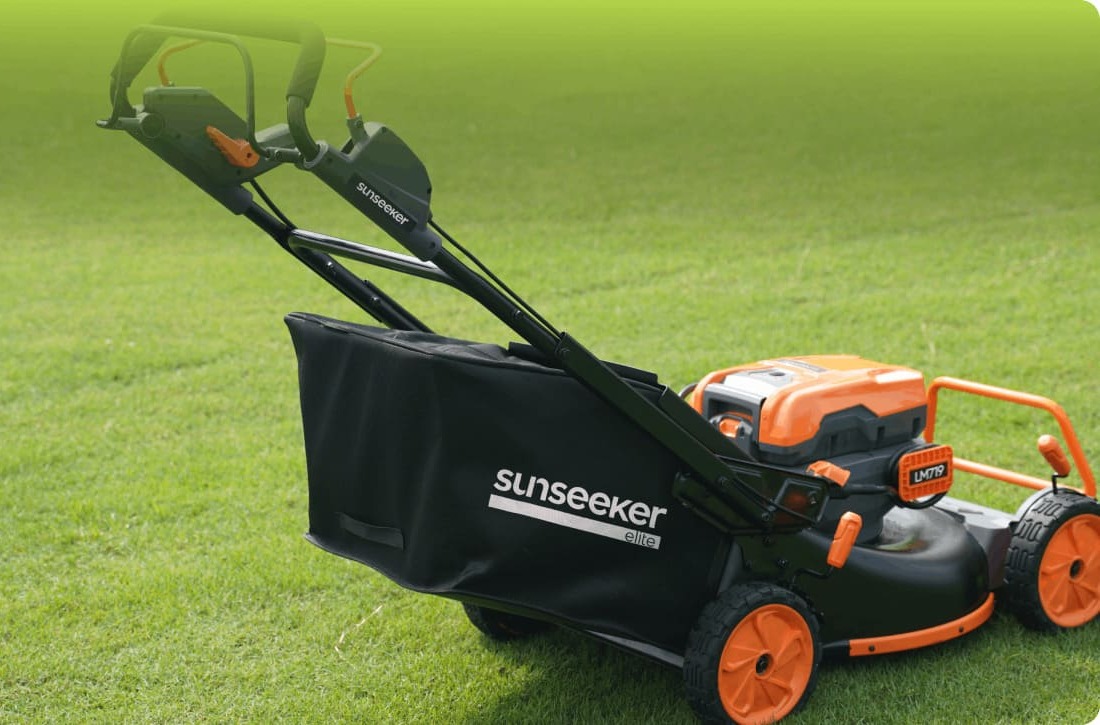
The Sunseeker Elite Lawn Mower (Plug-in Connect) stands out due to its professional-grade power delivery. It features a massive 3000W motor that does not flinch at steep inclines. Its 22-inch steel deck provides a wide cutting path, while the dual-blade system ensures that even thick, uphill grass is cut precisely. Beyond power, this model emphasizes user comfort with low vibration and quiet operation (Noise Level ≤ 98 dB(A)). This reduced vibration is essential for maintaining a firm, steady grip while navigating challenging sloped terrain for extended periods.
The Honda HRX series uses a Nexite deck that is rust-proof and lightweight. While it lacks the quiet operation of electric models, its variable-speed RWD system is excellent for adjusting your pace on varying degrees of incline.
For those who prefer a battery-only setup, the EGO Power+ Select Cut offers high torque. It is significantly lighter than gas mowers, making it easy to maneuver across a slope. However, users should monitor battery levels closely, as climbing hills drains power faster than flat-land mowing.
If your hills are massive, the Toro TimeMaster offers a 30-inch deck. This reduces the number of passes you need to make across the hill, minimizing your time spent on dangerous inclines. The trade-off is the significant weight, which requires a very strong self-propulsion system to manage safely.
The Ryobi 40V HP is a common selection for maintaining residential slopes. Its Smart Trek system matches the propulsion speed to the operator's pace, ensuring steady control on uneven turf. This rear-wheel-drive mower uses a brushless motor to provide adequate torque for typical grass growth, offering a 21-inch cutting path suitable for standard backyard landscaping. While easy to handle, the 40V motor lacks the raw torque found in high-wattage professional machines when tackling dense uphill growth.
Safety is the most important factor when discussing the best self propelled lawn mower for hills. Follow these rules to stay safe:
Finding the best push mower for hills is a balance of power, traction, and safety. A machine like the Sunseeker Elite Lawn Mower (Plug-in Connect) offers the heavy-duty 3000W performance and dual-blade precision necessary to turn a grueling uphill climb into a manageable task.
Remember that equipment is only half the battle—using the correct technique, such as mowing across the slope and maintaining your machine's traction system, is vital for a safe and beautiful lawn. Whether you choose the raw power of a commercial-grade electric or the versatility of a traditional self-propelled model, prioritize a mower that works with you, not against you.
For steep hills, a self-propelled, rear-wheel-drive (RWD) walk-behind mower is generally the best and safest choice. RWD provides the necessary traction by utilizing the weight shift that occurs on an incline. Electric mowers with high wattage (3000W+) are increasingly popular for their instant torque and lower center of gravity compared to top-heavy gas engines.
Standard manual push mowers (non-self-propelled) are only recommended for very slight inclines. For anything significant, a self-propelled push mower is much better as it reduces the physical strain on the operator and prevents the mower from rolling backward. The self-propulsion mechanism acts as a controlled drive, making the ascent safer and more consistent.
If a hill exceeds a 15–20 degree angle, it is too steep for standard mowers. Consider using a string trimmer or ground cover instead. For manageable slopes, always wear high-traction boots and mow across the face, never up and down. Using a 3-in-1 mower to mulch clippings can also help stabilize the soil on the incline.


